Botanical Authentication: Beyond Macroscopic Inspection
The global botanical and dietary supplement sector has entered an era of intense analytical scrutiny. Routine sensory or macroscopic evaluation of raw roots, leaves, and barks is no longer sufficient to satisfy international regulatory bodies or discerning brand formulators. Species substitution, accidental cross-harvesting, and deliberate economic adulteration require unambiguous chemical fingerprinting.
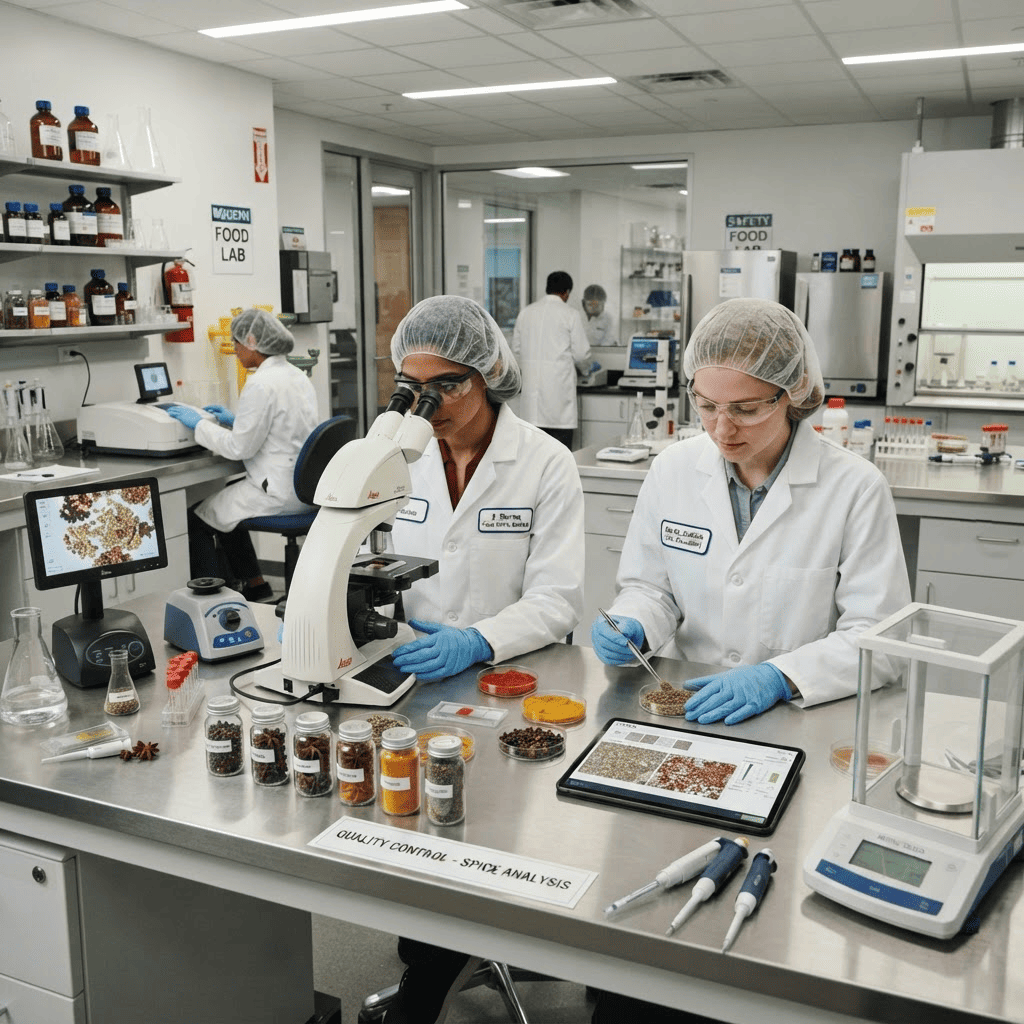
At Jugrajj Food & Herbs, every botanical incoming lot undergoes analytical species authentication before advancing to processing, guaranteeing verified botanical taxonomy.
HPTLC Chromatographic Fingerprinting & Marker Titration
The gold standard for botanical species identification is High-Performance Thin-Layer Chromatography (HPTLC). Unlike simple colorimetric checks, HPTLC generates high-resolution, reproducible visual chromatographic tracks displaying the unique multi-compound phytochemical distribution of an authentic plant species.
Our quality control laboratory verifies each batch against validated pharmacopeial reference standards (USP and Indian Pharmacopoeia monographs). Active chemical markers—such as withanolides in Ashwagandha, total curcuminoids in Turmeric, and tannins in Triphala—are quantified via HPLC, ensuring standard therapeutic strength in every production run.
Heavy Metal Toxicity Thresholds: ICP-MS Precision
Herbs absorb minerals and elements from agricultural soils. If cultivated in polluted groundwater zones, botanicals can accumulate hazardous heavy metals. Using state-of-the-art Inductively Coupled Plasma Mass Spectrometry (ICP-MS), our batches are verified against the world's most stringent pharmacopeial limits:
- Lead (Pb): < 0.5 ppm to 1.0 ppm (compliant with US California Proposition 65 thresholds).
- Arsenic (As): < 0.5 ppm.
- Cadmium (Cd): < 0.2 ppm.
- Mercury (Hg): < 0.1 ppm.
Pesticide Multi-Residue Screening (GC-MS/MS & LC-MS/MS)
Exporting botanicals to the European Union and North America mandates compliance with strict Maximum Residue Limits (MRLs). Our testing protocols employ tandem mass spectrometry (GC-MS/MS and LC-MS/MS) screening for more than 250 organochlorine, organophosphorus, synthetic pyrethroid, and triazole pesticide compounds, ensuring complete absence of persistent agrochemical contaminants.
US FDA FSMA 204 Traceability & Foreign Supplier Verification
Under the US FDA Food Safety Modernization Act (FSMA 204), food and botanical ingredient importers must maintain auditable Key Data Elements (KDEs) across all Critical Tracking Events (CTEs). Jugrajj Food & Herbs operates a digital traceability system linking every finished pallet and batch number to the farm harvest receipt, dehydration batch log, milling report, and lab certificate of analysis.