
The Philosophy of Natural Regenerative Cultivation
Modern intensive mono-crop farming has depleted global agricultural topsoils, degraded groundwater aquifers, and introduced chemical pesticide residues into consumer supply chains. At Jugrajj Food & Herbs, our agricultural philosophy is anchored in natural, conventional regenerative farming. Rather than extracting from the land, our farm partnership model across Punjab, Rajasthan, and Madhya Pradesh restores living ecosystems while cultivating export-grade botanicals, vegetables, and culinary spices.
We work closely with multi-generational smallholder farming families, transitioning agrarian acreage away from synthetic organophosphates and chemical fertilizers toward closed-loop biological systems. Our botanicals are grown using traditional Vedic farming insights reinforced by contemporary soil science.
Soil Microbiome Revitalization & Green Manuring
Healthy crops originate from microbiologically active soil. Conventional synthetic nitrogen fertilizers burn native humus and kill vital mycorrhizal fungi networks. Under our agricultural protocol, participating partner farms implement rigorous soil replenishment cycles:
- Green Manuring: Prior to planting crops like Moringa, Ashwagandha, or Turmeric, fields are seeded with nitrogen-fixing cover crops (such as Dhaincha/Sesbania aculeata or Sunn hemp) which are tilled into the soil at flowering to enrich active organic carbon.
- Bio-Dynamic Compost (Jeevamrit): Fermented indigenous formulations combining aged cow dung, cow urine, pulse flour, and virgin forest soil inoculate billions of beneficial rhizosphere bacteria per acre.
- Crop Rotation Cycles: Monoculture is strictly barred. Spice rhizomes alternate with leguminous pulses and deep-rooting brassicas to interrupt soil-borne pest lifecycles naturally.
Groundwater Conservation via Precision Drip Irrigation
Water scarcity poses an existential challenge in north-western India. Flood irrigation not only wastes precious groundwater but also leaches topsoil nutrients and creates anaerobic fungal root-rot vulnerabilities. Over 85% of our affiliated acreage utilizes automated sub-surface and surface drip-irrigation networks.
By delivering metered water and water-soluble botanical teas directly to the active root zone, our farms reduce water consumption by 55% to 65% compared to conventional furrow flooding. Soil moisture sensors eliminate over-watering, ensuring that crops develop resilient, deep root structures that concentrate essential oils and secondary phytochemical metabolites.
Biological Pest Suppression & Zero Synthetic Agrochemicals
Maintaining purity for global food processors requires total elimination of chemical pesticide drift and persistent synthetic chemical residues. Our integrated biological pest management (IPM) incorporates nature-identical countermeasures:
- Neem Oil & Karanja Formulations: Cold-pressed Azadirachta indica kernel extracts formulated with natural bio-surfactants act as potent anti-feedants and insect growth regulators without harming honeybees or earthworms.
- Pheromone Trapping & Sticky Bands: Visual yellow and blue sticky traps combined with target-specific pheromone lures monitor and suppress pest populations before economic injury thresholds occur.
- Border Trap Crops: Marigolds (Tagetes erecta) and castor plants ring our herbal fields, drawing away destructive nematodes and lepidopteran pests from valuable herbs.
Post-Harvest Integrity & Low-Temperature Dehydration
The journey from field to final micro-powder requires uncompromising post-harvest discipline. Herbs harvested during peak solar potency undergo immediate triple-stage washing in ozonated water to remove field dirt and environmental dust without scrubbing away volatile surface resins.
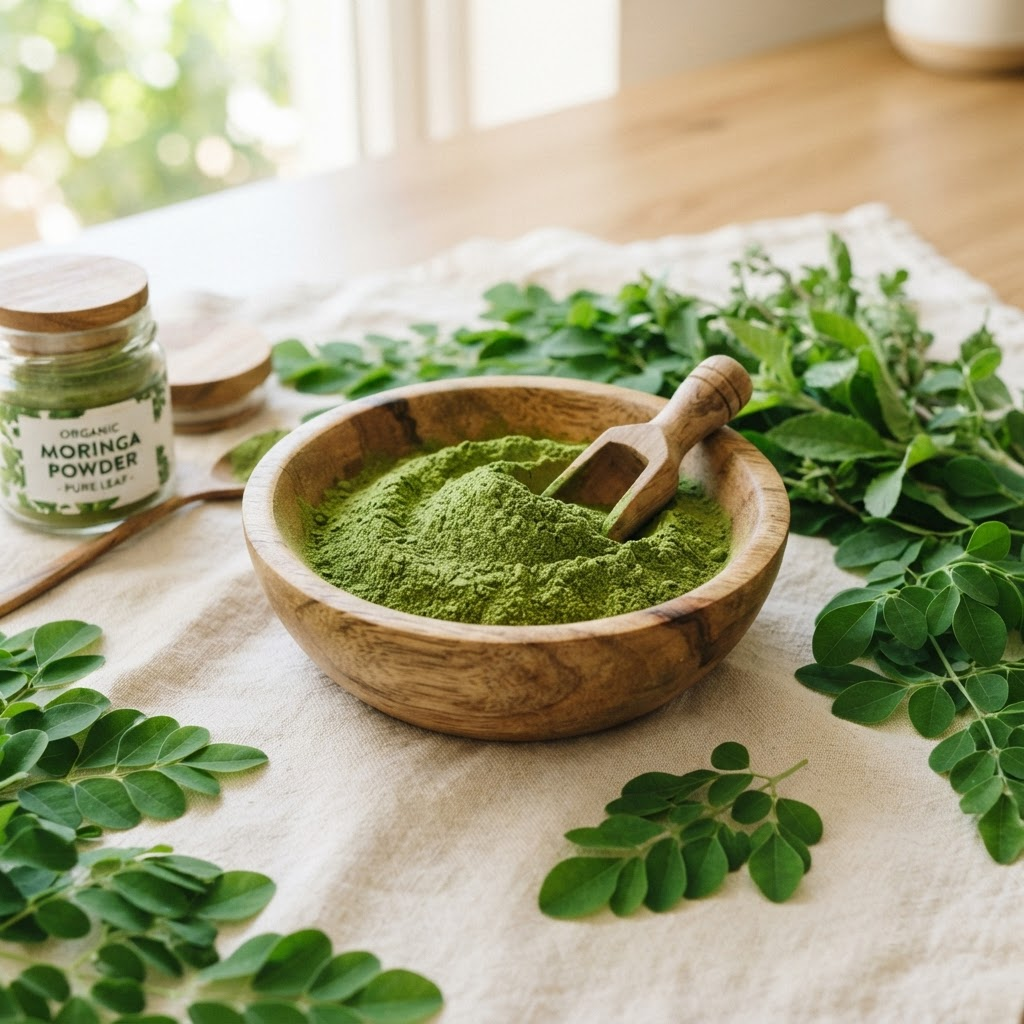
Dehydration occurs in clean-room enclosed solar tunnel dryers and temperature-controlled stainless-steel convective dehydrators maintaining temperatures below 45°C. This gentle thermal curve preserves vibrant natural colors—such as the rich chlorophyll green of our Moringa and the ruby vibrancy of our Beetroot—while keeping volatile oils, vitamins, and enzymes biologically active. Finished lots are nitrogen-sealed and transferred to humidity-monitored warehousing within 24 hours of final milling.